

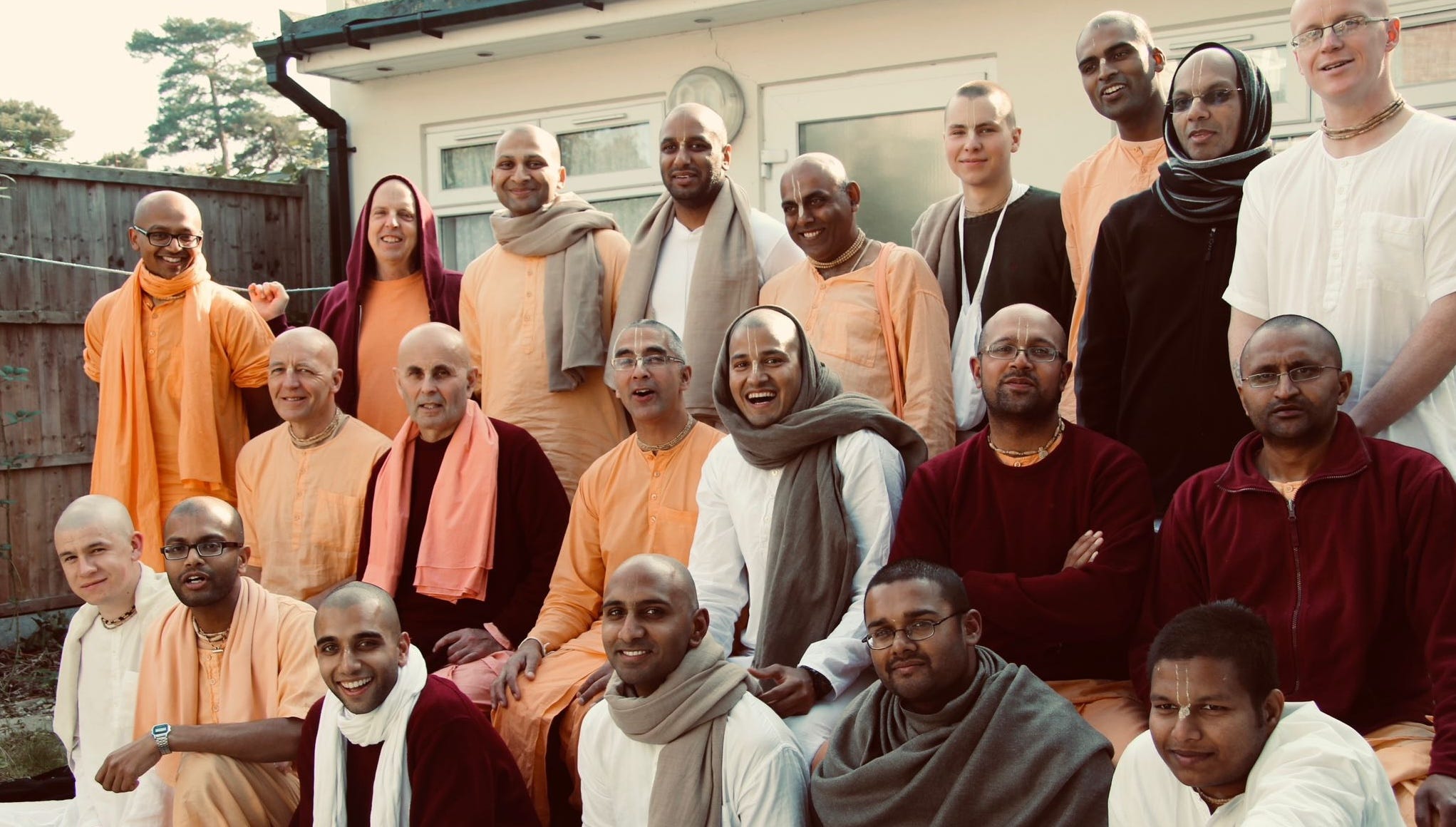
Old pictures take you back in time, inviting the opportunity to philosophise. Who was I? Where was I? What brought me here? Could it have been any other way? The photo album is not merely sentimental; it is the site of curiosity. We are a series of revisions—erasures, additions, and erasures again, beneath which the soul persists—time doesn’t take away everything from us, it takes away everything that’s not us. The philosopher pursues the timeless, but also grapples with the transient. Yesterday, I looked through photos from earlier monastic years. Much has changed. For over two decades, I lived alongside more than a hundred monks from endlessly diverse backgrounds. We argued, laughed, and served, chasing mystical adventures alongside the ordinary pulse of close communal life. Our paths have diverged—some towards public life, others into family life, still others into a quieter life. Alas, some have passed into another life, each on a unique trajectory. The Upaniṣads call it the “great transit.”
People assume that monastic life, and indeed spiritual life, kills personality; it’s the polar opposite. It actually exposes the scarce individuality we began with—how much of our identity is inheritance, imitation or adaptation to trend and tradition? People seek visible individuality—on the surface, and in the grammar of possession and display. The risk of showy expression is to lose essence, and in endless variation, we may never find depth. Simplicity beckons a deeper exploration. In relative silence, the monk refuses to be unconsciously shaped, daring to challenge everything the world demands of us. That invitation extends to each one of us—the call to spiritual formation. This mystical process awakens truth, goodness and beauty, guiding us to the life worth living. If you can, don’t hesitate. Do it. Stop, step away and stay still for some time.
The Greeks called it paideia: education beyond the intellect, shaping emotions, engineering habits, refining desires, and, most importantly, clarifying the calling. Its older Vedic counterpart—brahmacarya—demanded a celibate, monastic life, where one “immerses in the spirit.” Parents obsess over careers, yet neglect the education of life itself. They teach earning, not living. Monastic training restores our lost participation in the eternal. This is not a spiritual holiday, but a serious withdrawal—a disciplined refusal to be hurried into inauthentic life. To stop, even though everyone else is running. The monk cultivates the courage to think critically—to resist mindless conformity and quiet complicity. Priceless. Consider how much we sacrifice for securing a livelihood, and then calculate how little we invest—time, energy and passion—in understanding ourselves, discerning purpose, and encountering the divine. To expect grace without sacrifice is not just naïve—it’s audacious.
The monk, however, must avoid another naïveté: entry into the monastery is an opportunity, not a guarantee. The “inner monk” must awaken, opening the door to the contemplative life—alert to what the world overlooks. Those with the vision of eternity re-enter the arena of life, situating every event, experience, and emotion within the master plan of Divinity. And what of those who cannot withdraw from the world, renounce its demands, or practise brahmacarya? To disconnect, disappear and periodically deprovincialise is available to all—in a park, a faraway place, or in the margins of everyday life. Stop, step away and stay still. Observe the game, don’t just chase the ball. The “inner monastery” need not be bound by walls or vows, inviting one to do the inner work in order to live the good life.
Brahmacarya originaly meant to study in secluded place with the presence of the qualified teacher, guru or acarya has drifted to the modern concept of proselytism in the turmoil of the streets, with sight not conducive for a daily absorption, called preaching.
In the mean time the youth of the sadhaka missed its sadhya, as obtaining the bhakti jñana and acquiring the sufficient knowledge for his grhasta life, protection of his wife and children, but only without qualification for earning his sustainance, all for the sake of collecting alms for maintaining the institution.
After many years of wandering from city to city, the exhausted jiva has to find the assistance of social services not accepted anymore in the temple he had once contributed to maintain, forsaken by the same autorities who used to praise him for his scores.
This is the peregrination of the enrolled jivaatma.
Thankyou for sharing your personal journey, and also uplifting other souls on theirs. You have a unique skill of simplifying deep ancient scriptures in a way that everyone ,no matter what their background or experience can access. What is really appreciated is your deep understanding of many traditions/rules created within society. You have a beautiful way of carving out pure intentions that were set within ancient teachings and you deliver them in a very human way. That’s true Seva. Please keep shining your light bright. Hare Krishna.🙏❤️🙏