

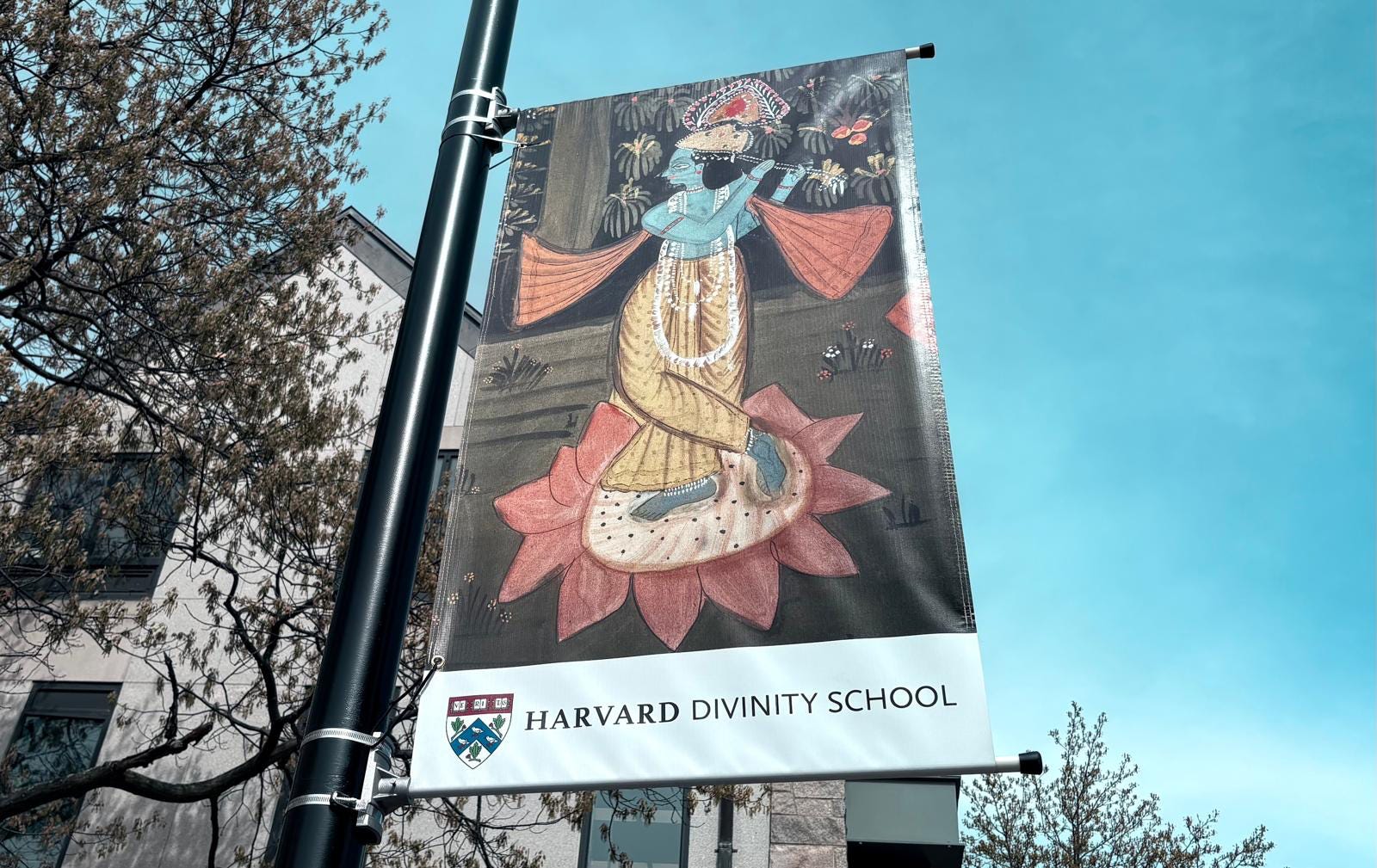
In certain traditions, monks take a vow of stability. “All monasteries are more or less ordinary,” Thomas Merton writes, “the ordinariness is one of its greatest blessings.” One must come to realise that every place in the world is basically the same, exposing the grand deception of endless novelty, graphically dismissed in the Bhāgavata as “chewing the chewed.” Instead, to remain in one place, one occupation and one rhythm, rediscovering divinity in ever-new ways. Radical! After nine months of stability, I see the logic. My world contracted into a triangular circuit—the living room, lecture hall, and library—repeated every day, with near-perfect regularity. I calculated the number of hours spent reading and realised that, at my normal pace of life, it would take ten years to accumulate the same! I doubt I’ll retain it all, but that was never really the point. It was about finding absorption. Disappearing into thought without interruption.
Ironically, this period of stability was actually a project in destabilisation. I’ve spent this time living at the edge of the inside, away from the identity I’ve assumed for many years. Distance from my own life brought a flood of thoughts, and I tried to share that here, as best I could. Writing is always a tension. I am trying to express ideas, but I am also discovering them in the process. Published words remain unfinished work, even if written convincingly. I try to address what people care about, but I must share what I am genuinely experiencing. It must be wisdom that breathes. I want the writing to feel human: personal, honest, down-to-earth. Then there’s the danger of turning everything into autobiography, making it “all about me.” Thanks for bearing with me and kindly forgive any mistakes. This will be my final blog, at least for the foreseeable future.
My last paper of the year is entitled “Into the Forest.” I’m studying the Bṛhad-āraṇyaka Upaniṣad, following the enigmatic Yājñavalkya who weaves in and out of multiple scriptures. This married sage is never short of words, ever-engaged in fascinating debates and discussions. In the Bṛhad-āraṇyaka Upaniṣad, he reaches his mature conclusion in a final dialogue with King Janaka. With clarity and conviction, he destroys the material façade and, in typical Upaniṣadic style, foregrounds the beauty of ātman. Janaka wants to know more, but Yājñavalkya can only describe it in apophatic terms— “Neti! Neti!” he says, “not this, not that.” Grappling with these thoughts, he soon falls silent. Nothing more to share. Then, the Upaniṣad says, “he walks away.” Into the forest. Never seen again. Renounces the world. Just like that. Once captured by true knowledge, you are never the same again.
In that sense, I leave Harvard a changed person. Having heard, read, and digested so much, how can you not be? And yet, beneath all that accumulation, a deeper hunger persists. The road stretches beyond academia. Like Yājñavalkya, our gaze turns towards the forest, but a special forest which is slightly more playful. The Upaniṣads excel in exposing illusion, but it’s the Bhāgavata that reveals the eternal truth of Vṛndāvana. That is the path I walk, that is the destination I seek. The scholar-saint Sārvabhauma captures it beautifully:
We are not poets, nor are we logicians.
We have not crossed
the vast ocean of Vedānta,
and we definitely do not win debates.
We are simply servants
of a cheating cowherd boy.
(Padyāvalī 72)
There is something quietly radical in the idea that depth does not come from movement, but from remaining long enough for the surface to fall away.
The way you describe stability not as confinement but as absorption felt deeply true to me. Repetition changes when attention stops resisting it. What first appears ordinary slowly begins to reveal another layer beneath itself.
And perhaps that is why certain forms of knowledge end not in explanation, but in silence. Not because nothing remains to say, but because something has finally been seen without needing to be possessed by language.
Heartfelt appreciation, Maharaja, for your Harvard Blogs. Never did your entries sound like an autobiography. I would have welcomed more autobiographical content because you teach through experience and you are dear to all of us as our guide, mentor, and teacher.
Hearing about your day to day activities has been delightful! Each entry was a wonderful balance of reflection and honesty. Heartfelt thanks for each one and for your Instagram Reels and photos while at Harvard as well!
Sandipa entry stands out for me; it is like a fine tapestry woven together by an expert weaver. Reading the connections of your previous names, and most profoundly your name being linked to your Spiritual Master’s name in CC 1.1.4 feels like divine providence. I am inspired to dive into Caitanya- caritamrta to get a glimpse. Thank you for your inspiration, your kindness in sharing your experiences and your care with us. I for one will miss knowing you are at Harvard. All the best as your journey continues, please carry us all with you!!!